
Air Dome:
The structure is supported by the internal and external air pressure difference, which stabilizes the entire envelope system and accessories.
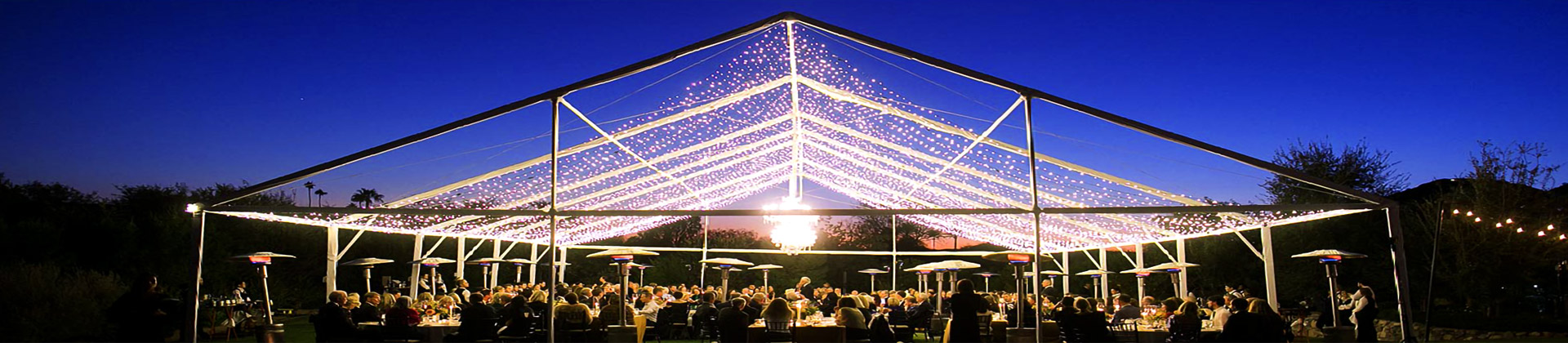
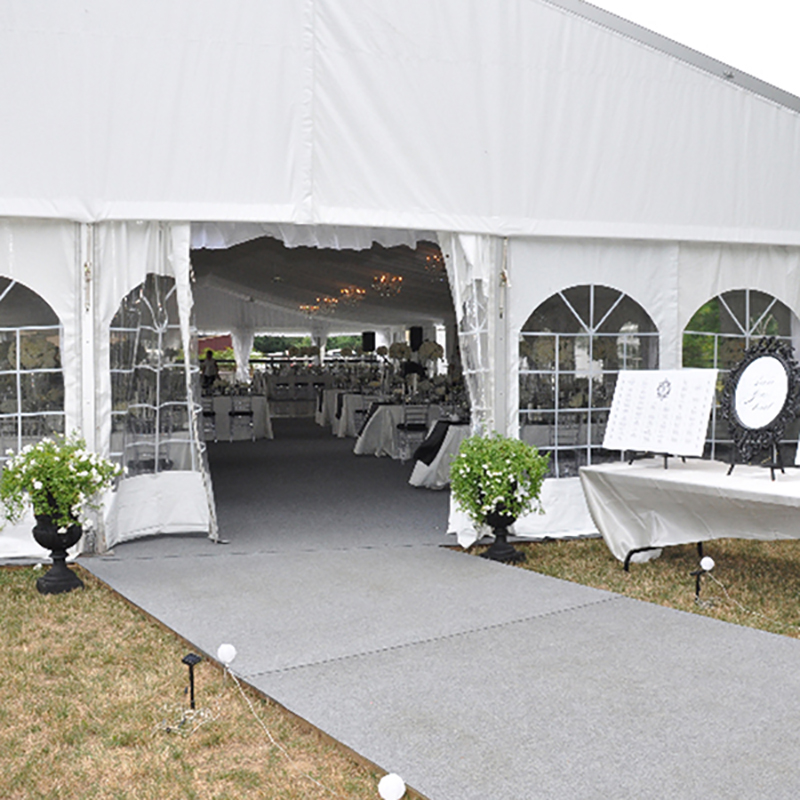
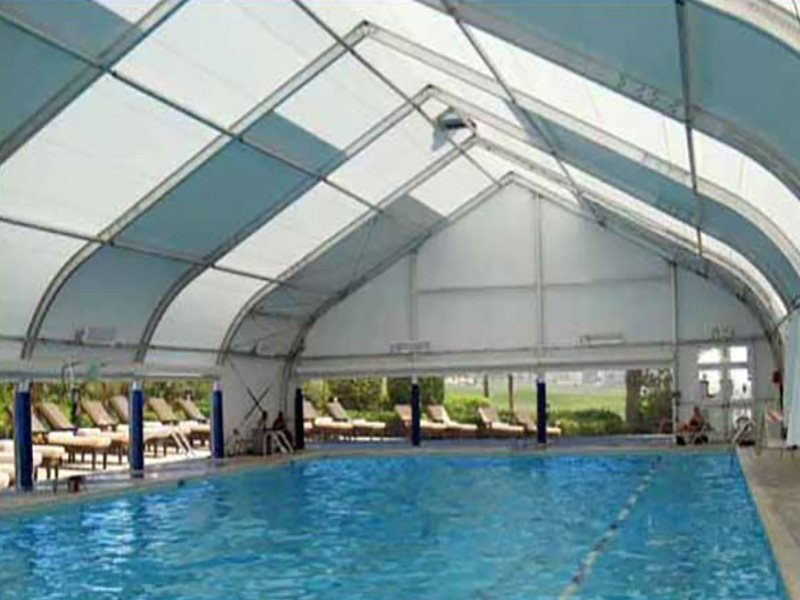
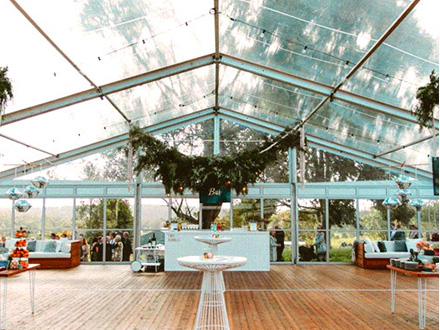
Aluminum Tent:
Uses aluminum alloy frames (main truss, purlins, and roof panels) to jointly bear external loads such as wind, rain, and snow.
Air Dome:
Double-layer membrane (outer + inner) with optional insulation layer. Lightweight: approx. 2.5–5 kg/m².
Aluminum Tent:
Aluminum beams, purlins, roof panels, and optional insulation. Heavier structure: approx. 20–40 kg/m².
Air Dome:
Uses strip foundations. Loads are mainly upward tension forces, resulting in a simple and efficient stress system.
Aluminum Tent:
Requires independent column footings and foundation beams, bearing tension, compression, and shear forces. The stress system is more complex and demanding.
Air Dome:
Uses translucent diffusion membrane for natural lighting. Indoor lighting is achieved through reflected light, no glare, soft and comfortable atmosphere.
Aluminum Tent:
Relies on skylights or roof panels for daylight. Lighting is mostly direct light, which may cause glare and uneven illumination.
Air Dome:
Made of inherently flame-retardant materials. No additional fire treatment required. In case of fire, loss is relatively limited.
Aluminum Tent:
Requires additional fire protection treatment. In case of fire, potential losses are higher due to rigid structure and materials.
Air Dome:
Uses high-frequency welded joints, forming a fully integrated waterproof system with excellent sealing performance.
Aluminum Tent:
Connected with self-tapping screws and panel joints, which may cause potential leakage risks and maintenance difficulty over time.
Air Dome:
Highly integrated system with minimal on-site cross-work. Fast, clean, and well-organized installation process.
Aluminum Tent:
Requires coordination of multiple trades on site, resulting in more complex and fragmented installation management.
Air Dome:
Can be designed as a seasonal or temporary structure, easy to adapt for different uses.
Aluminum Tent:
Generally used as a permanent or semi-permanent structure, less flexible for seasonal relocation.
Air Dome:
Installation and dismantling can be completed within one day, extremely fast and highly relocatable with very low cost.
Aluminum Tent:
Installation takes longer and dismantling requires more labor. Relocation involves higher cost and partial material loss or reinstallation of anchors.
Air Dome:
No highly skilled labor required. Simple training is enough. Installation method is independent of membrane type, making site management easy and efficient.
Aluminum Tent:
Requires skilled technicians. Training cycle is longer, and different structures require different installation knowledge, making site management more complex.
Air Dome:
Typically completed in a few days (less than one week) with minimal weather impact.
Aluminum Tent:
Usually takes several weeks to over one month, and is more affected by weather conditions.
Air Dome:
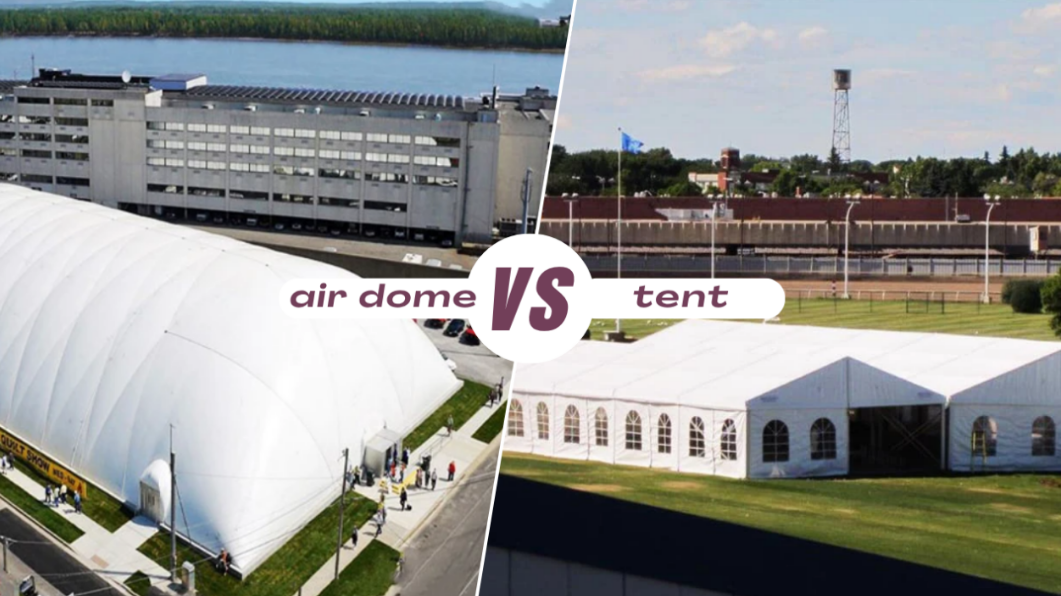
Modern, futuristic, and smooth membrane form. The seamless curved structure delivers a high-tech, luxury, and iconic visual impact, especially attractive for sports venues, exhibitions, and commercial branding.
Aluminum Tent:
Traditional frame-based appearance with visible structural joints. Functional but less visually iconic and less architectural impact compared to air dome structures.

Hi! Welcome back.
How are you doing?
+86 17712768856
NO.1319-1 Xicheng Rood Qingyang village, Jiangyin City,Jiangsu Province,China
Subscribe today and get educated and entertained with the monthly SYXTENT email